Tanzania Lakes.
Tanzania Lakes are one of the most underrated destinations with very few people knowing about them and their locations despite the fact that they are among the most beautiful ones in the entire world. Given their sizes and features, they offer some of the most outstanding and iconic attractions and activities; right from wild life viewing done during boat cruises, both spot and actual fishing to swimming in the fresh lakes and enjoying a kayak cruise at dawn.
In addition to these amazing activities offered by these incredible lakes, they are an important source of water and livelihood to the local community and ecosystem at large. A vast diversity of animals like hippos, crocodiles, various species of fish among others pride themselves in calling them home as well.
Let’s delve right into knowing about some of the beautiful and break taking lakes in Tanzania.
Lake Victoria- The Largest Lake in Africa.
In the hot seat we have Lake Victoria, a natural marvel and home for a vast diversity of wildlife and amazing features. It is the largest lake in Tanzania spanning through East Africa across countries of Tanzania, Uganda and Kenya. Not only is it the largest lake in Africa, but also known worldwide for being the largest tropical lake by surface area.
Meaning “the giver of life”, its local name in Luganda a local language in Uganda is Nnalubaale. However, in 1858, it received its new name Victoria when John Hanning Speke named it after the Queen Victoria of England.
It would surprise you to know that it is relatively shallow with an average depth of just 41m despite its grand size. It is shallow enough for sunlight to penetrate and nourish the ecosystem underneath hence being the most beautiful tropical lake in the world.
Given its features, it hosts a vast number of fish species with over 500 types of water plants most being endemic.
The lake is home to a myriad of fish species, notably over 500 types of cichlids, many of which are endemic. Adding a beautiful color and life to the aquatic environment in the lake, these cichlids are known or their appearances and features. The dramatic vibrancy underneath is mirrored on the shores of Lake Victoria.
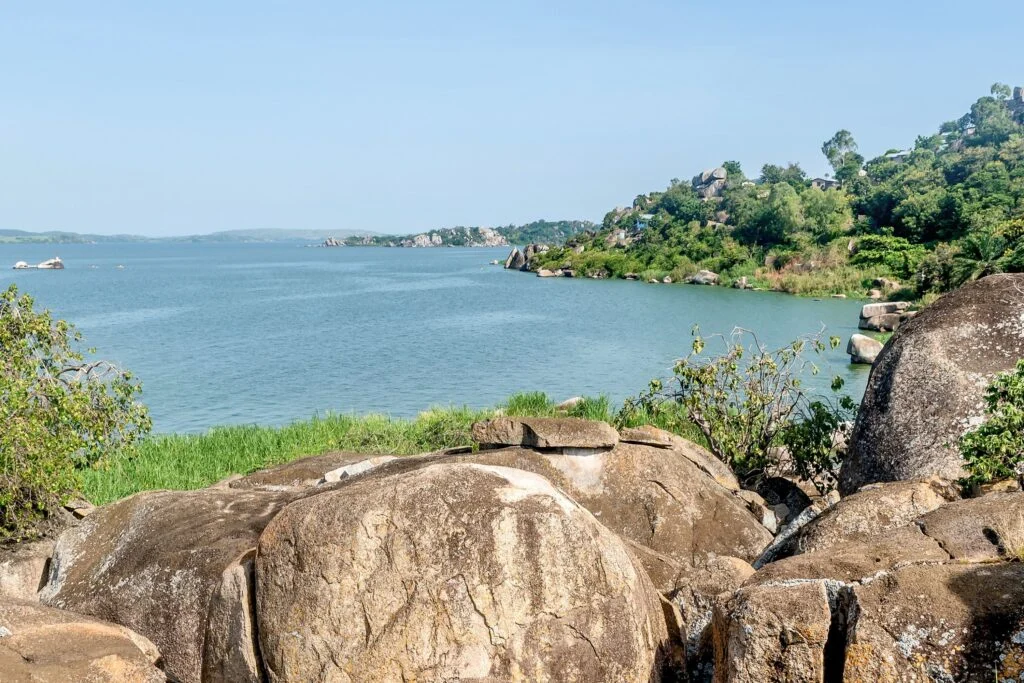
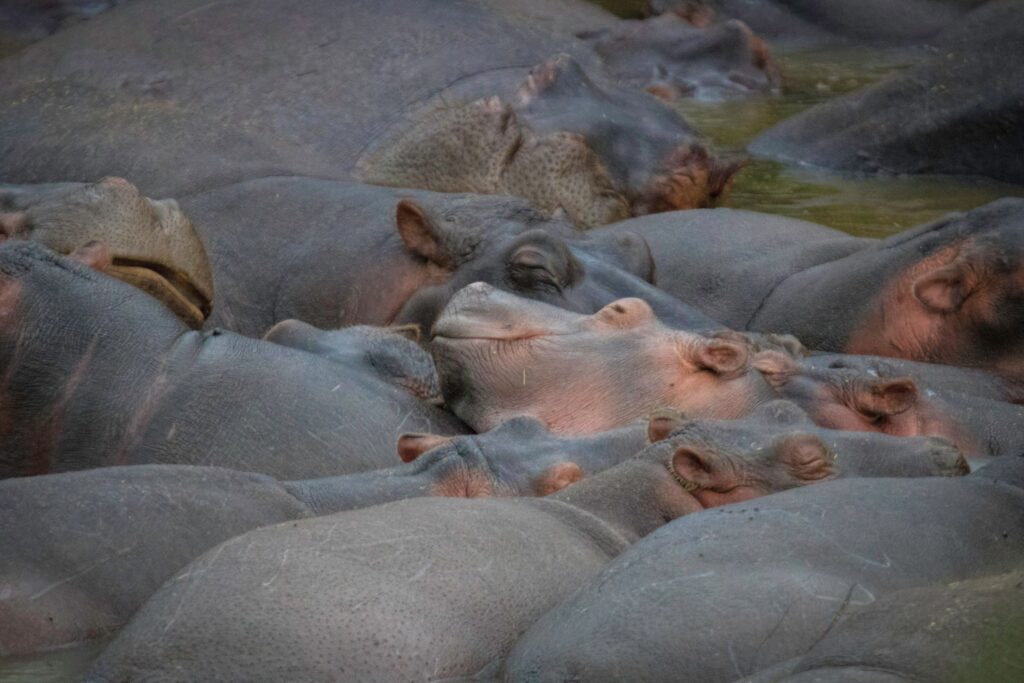
One of the most common sight on this beautiful lake is the hippopotamus often found lazily sunbathing on the banks alongside other wildlife like waterbucks, cane rats, bohor reedbuck, among many others
With it being the source of the Nile in Uganda, it harbors some of the most I credible reptiles like the formidable Nile crocodile, a number of turtle species like the William’s mud turtle, the African helmeted turtle to mention but a few. Fun fact about these species is that they are unique to the incredible Lake Victoria.
Are you a bird life enthusiast? guess what? Prepare to be amazed because you are definitely not ready for what you are about to experience. Lake Victoria has a lot of incredible sights to offer in this regard with over 300 bird species. Some of the species you won’t leave without sightseeing include the African marsh harrier, shoebill, herons, geese, grey parrots, grey crowned cranes, Kingfisher and the of course the African fish eagle.
The lake has an undeniably beautiful array of scenic views and cultural encounters thanks to the well-known Ssese Island and Ukerewe Island which further magnify its magic and charm.
You and I can agree that with this mix of rich biodiversity, scenic views, surprisingly fascinating culture and much more, Lake Victoria should indeed be at the peak of all travelers’ bucket lists.
Lake Tanganyika – The World’s Longest Lake
With over an outstanding stretching length of 626 kilometers (420 miles) and width of 50 kilometers, Lake Tanganyika not only reserves a world title as the world’s longest lake spanning through Tanzania, Burundi, Zambia and the Democratic Republic of Congo but also the second largest fresh water body by volume following Lake Baikal in the sovereign nation of Russia in the entire world.
It holds an about 16% of the Earth’s available surface freshwater with many rivers getting their water source from it before finally pouring its water into the Congo River System in DRC.
There’s more to this lake than what meets the eye given its clear blue waters and sandy beautiful beaches dotted with palms and acacia trees. It boasts a vast diversity of ecosystems with over 250 fish species and quite a number of aquatic life found nowhere else but here.
The formidable crocodile and families of hippos sunbathing lazily at the shores are just examples of the I credible wildlife that pride themselves in calling Lake Tanganyika Home. Beautiful colorful birds like African fish eagles and the kingfisher are just a few of the birds that can be found spreading their wings over the deepest Lake in Africa.
Lake Malawi – The Meromictic Lake
With over 29,000 square kilometers, Lake Malawi is Africa’s third largest lake and the ninth in the whole world. Fun fact about this beautiful lake is that it is one of the few meromictic lakes on earth. Wondering what this means, right? This means that Lake Malawi has layers of water with different properties that don’t intermix, that is, the warmer, oxygenated upper layer doesn’t mix with the colder, salty and less oxygenated lower layer.
This unique trait is attributed to its depth, river inflows and the geology of the surrounding valley. Furthermore, the lake is fed with more nutrients that it can contain by the neighboring highlands hence minimal water circulation.
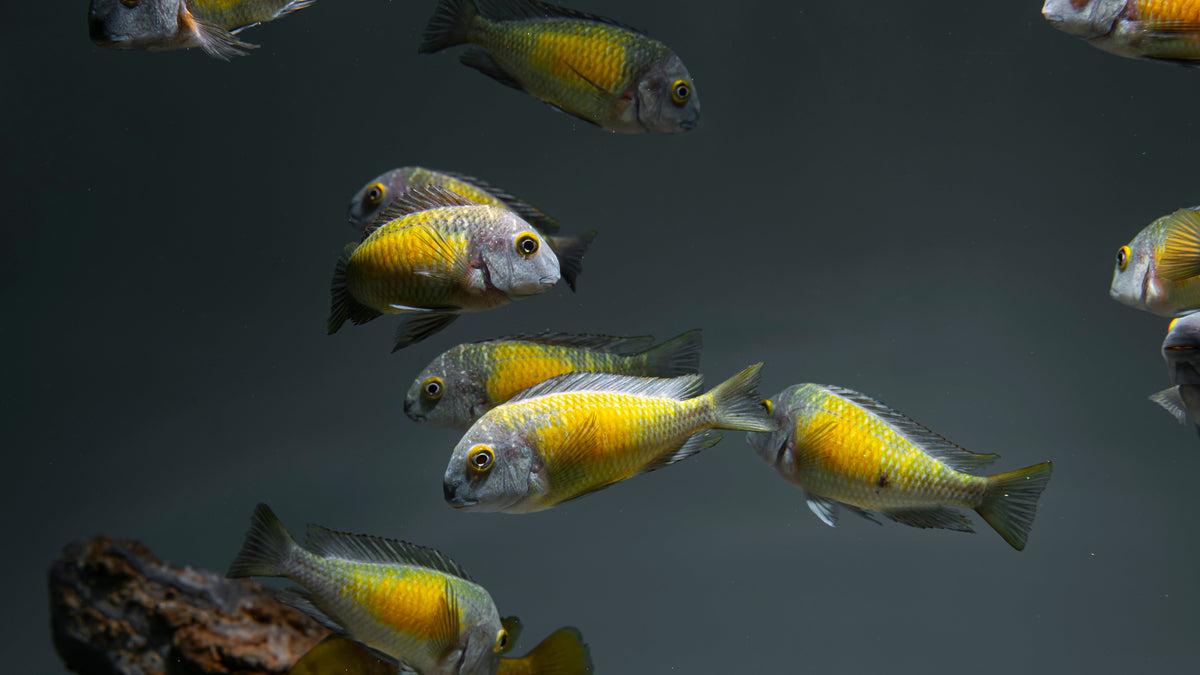
The vast diversity of aquatic habitats in Lake Malawi permits support of an extremely rich biodiversity with over 1,000 cichlid fish species and many more new species still being discovered. These cichlids have amazingly adapted the various microclimates within the lake. Among other biodiversity found here are the crabs, shrimps, jellyfish, sponges and many more. This makes Lake Malawi a fresh water body coral reef with more fish species like no other on Earth.
Lake Rukwa – The Fluctuating Lake
Strategically located in the Southern Highlands of Tanzania, Lake Rukwa is an immensely fascinating lake extreme seasonal fluctuation.
Much as it fills up into a massive inland sea with over 2,600 square kilometers, Lake Rukwa dramatically drains up in the dry season leaving behind a network of swamps and channels.
Due to this trait, the water level changes have an immense impact on the physical appearance of Lake Rukwa and the animals that call it home.
During the rainy seasons when the water levels are high, the lake boasts a vast diversity of fish species and aquatic plants attracting over 400 species of birds that come to feed and nest in the papyrus reeds Hippos and crocodiles will be found lounging and lurking on the surface.
Contrary to the rainy season, the lake loses most of its water leaving behind a large floorplan containing pools and wetlands in the dry season. During this season, animal life in lake Rukwa adopt in magical ways with fish taking refuge in small channels, crocodiles hibernating in the mud dens and hippos regulating their body temperatures in the mud pools.
In spite of all these factors, Lake Rukwa remains an important ecosystem for Tanzania.
Lake Natron – The Red Lake
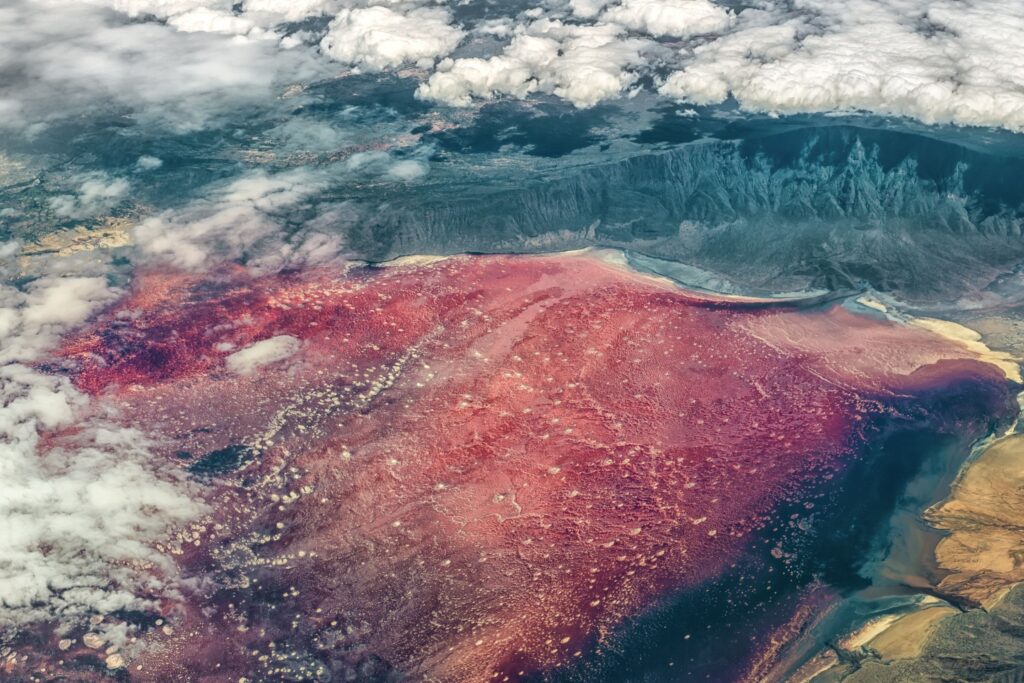
Located in Northern Tanzania near the Kenyan border, Lake Natron is one if the unique water bodies in Tanzania with just a depth of 3 meters. It is called the red lake because of the Spirulina algae that turn the water into red-orange.
It has a an extraordinarily high alkalinity with its water PH reaching 12. The lakes alkalinity is attributed to its location near an active volcanic area hence sodium carbonate and countless other minerals entering the lake from small rivers and hot springs and a high evaporation rate.
Due to this factor, it is incapable of hosting quite a number of lifeforms. However, there is quite a number of extremophiles that have adapted just fine.
It also contains tilapia which thrive near the hot springs where the alkalinity is lower. They have a mucus coating that protects them from burning.
This beautiful lake has adapted flamingos with convoluted bills that filter the spirulina algae and long legs that keep them away from the water surface.
Beyond these fascinating creatures lies an astonishing fact: Lake Natron serves as the exclusive East African breeding haven for a remarkable population of 2.5 million lesser flamingoes. Their “near threatened” status is intricately tied to their reliance on this singular location, making the lake an irreplaceable sanctuary for these majestic birds.
Lake Eyasi – The Salt Lake
Situated at the base of the Great Rift valley just south of the mighty Serengeti National Park and southwest of The Ngorongoro Crater in Northern Tanzania, Lake Eyasi is a Salt Lake surrounded by steep escarpments and savannah grasslands.
It is well known for high salinity which creates an odd ecosystem that is able to live in harsh arid conditions. Algae and micro-organs do well in mineral-rich waters hence a vast diversity of bird species flocking the lake for a feast. This salinity is attributed to years of evaporation under the hot tropical sun leading to high concentration of salt and minerals, resulting into a milky, turbid look.
Although the water levels fluctuate depending on the rainy season, lake Eyasi is shallow stretching over 400 square kilometers
Flamingos, pelicans, storks, and ducks chill along the muddy shores while birds of prey like the African fish eagle circle overhead. The savannah plains surrounding the lake host grazing mammals like zebras, antelopes, and baboons.
Lake Eyasi’s relevance goes beyond its natural beauty despite having rare and ancient landscape defined by a vast diversity of birdlife and its high salinity. This is proven by archaeological findings around the lake providing evidence of early human settlements dating back 200,000 years.
Lake Manyara – The Flamingo Lake
Lake Manyara is found is Lake Manyara National Park popularly known as the only place in Tanzania where you can find tree climbing lions. It is a shallow alkaline lake covering a total land area of just 230 square kilometers.
Nonetheless, it is filled with beautiful and a vast diversity of wildlife.
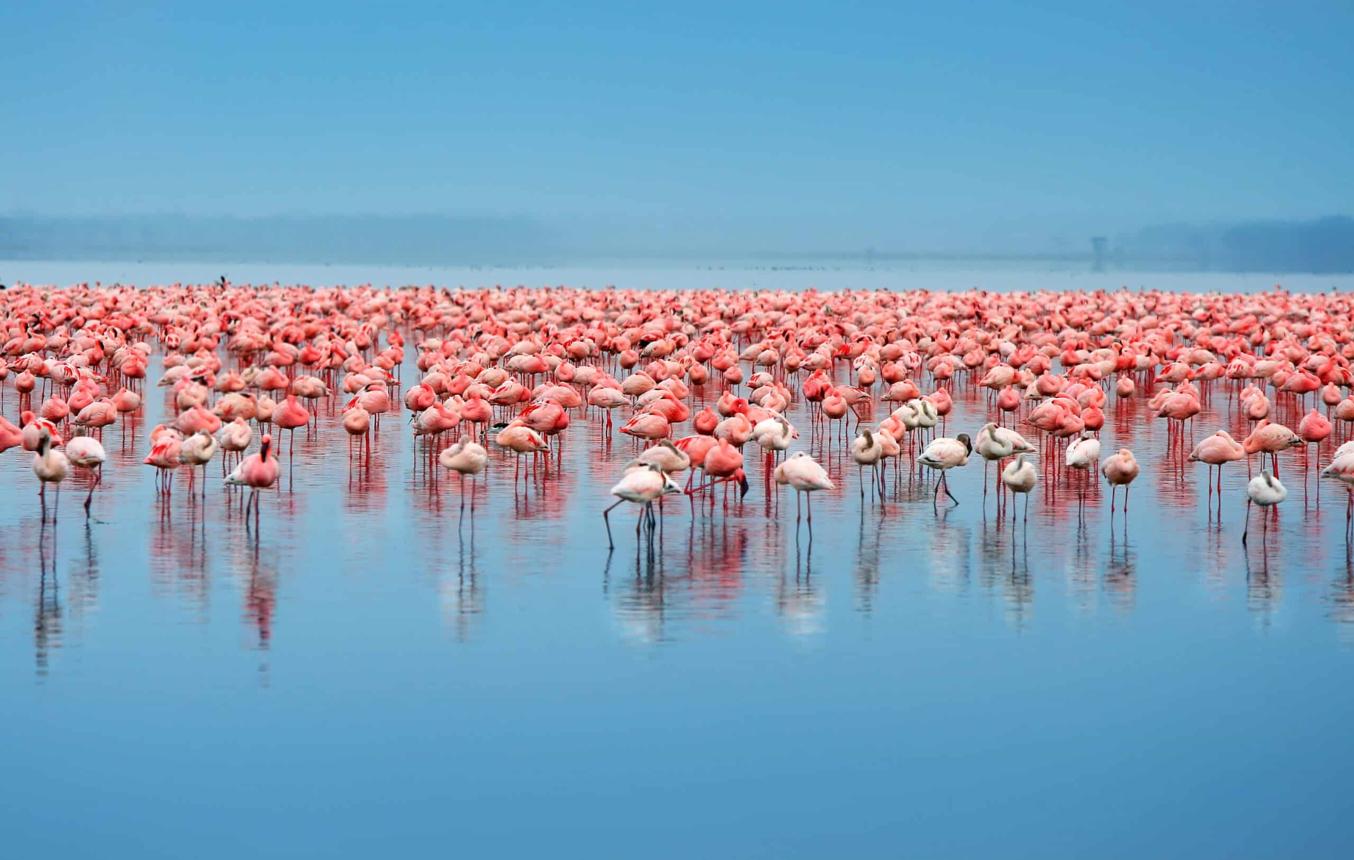
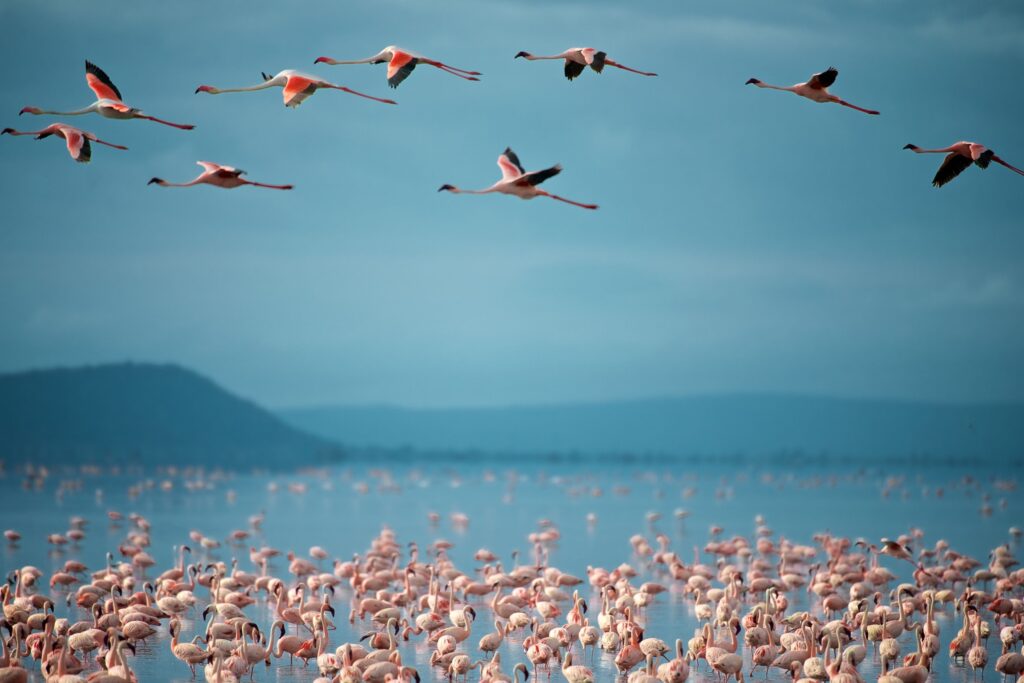
Lake Manyara is known as the “Flamingo Lake” because of the great number of Lesser Flamingos with an approximation of over 400,000 that flock its shores looking for algae and other food items they can get throughout the year.
These beautiful birds paint the lake pink with an enormous number of them striking their long legs on the surface with the necks dipped inside to filter their food.
Other than flamingoes, over 400 species of birds frequently flock the lake examples including storks, cormorants, pelicans, kingfisher, eagles and vultures among others. Some other birds that are attracted by the acacia woodlands around the lake include weavers, hornbills, starlings and babblers to mention but a few.
Now with all these you might be wondering, is Lake Manyara a birdwatchers’ haven? Absolutely right it is.
If you are a bird life enthusiast interested in watching some incredible wildlife, Lake Manyara offers these at the comfort of your seat with game drives giving you a close encounter with some if the vast diversity of animals that define the Lake Manyara National Park ecosystem like the tree climbing lions which can only be found here in Tanzania.
Tanzania at large has more than enough to offer given its mix of rich biodiversity, natural beauty and cultural experiences with the National Parks and reserves it has amongst other attractions. Now, the lakes bring this whole experience to another level. They are iconic, historic, mysterious and have lot to offer with each lake having its own unique features that will give you memories you will never regret making.